
Is Your Warehouse Packaging Process as Efficient as It Could Be?
Published:
Is Your Warehouse Packaging Process as Efficient as It Could Be?
In a busy warehouse or distribution centre, every minute counts. From receiving and storing products to picking, packing and dispatching orders, each stage of the operation plays an important role in overall productivity. However, one area that is often overlooked when looking for opportunities to improve performance is the packaging process.
An inefficient packaging operation can lead to unnecessary labour costs, production bottlenecks, inconsistent packaging quality and delays in getting orders out the door. As order volumes increase and customer expectations continue to rise, businesses need to consider whether their existing processes are keeping up.
Improving warehouse packaging efficiency isn't simply about packing products faster. It's about creating a smoother, more consistent workflow that makes better use of time, labour and equipment.
So, how efficient is your current warehouse packaging process, and where could improvements be made?
1. Identifying Common Warehouse Packaging Inefficiencies
Even well-established warehouse operations can develop inefficiencies over time. Processes that once worked effectively may become less suitable as order volumes grow, product ranges expand or customer requirements change.
Some of the most common challenges include:
- Excessive manual handling: Employees spending significant amounts of time manually sealing cartons, preparing packages and wrapping pallets.
- Repetitive tasks: Repeated manual activities that take workers away from other important warehouse responsibilities.
- Inconsistent packaging: Variations in how cartons are sealed or pallets are wrapped, potentially affecting product protection during storage and transit.
- Workflow bottlenecks: Delays caused by packaging stations that cannot keep up with picking and order preparation.
- Underutilised equipment: Packaging machinery that is outdated, unsuitable for current production demands or not being used to its full potential.
Individually, these issues may seem relatively minor. However, when they occur throughout the working day, they can have a considerable impact on warehouse productivity and operating costs.
Identifying where time is being lost is the first step towards meaningful packaging process improvement.
2. The Hidden Cost of Manual Packing Processes
Manual packing remains an important part of many warehouse operations. However, relying too heavily on manual processes can create challenges, particularly in facilities handling high volumes of products.
Consider the time employees spend manually folding cartons, applying tape, sealing boxes and wrapping completed pallets. These tasks are essential, but they are also repetitive and time-consuming.
As order volumes increase, the pressure on employees increases too. Manual packing can make it difficult to maintain consistent output, particularly during busy periods when deadlines are tight.
There are several potential disadvantages to consider:
Increased labour requirements: Manual packaging tasks require ongoing employee attention, which can increase labour costs as production demands grow.
Reduced throughput: Employees can only complete a certain number of packaging tasks within a given timeframe, potentially limiting the overall speed of the operation.
Inconsistent results: Manual sealing and pallet wrapping can vary between employees, making it more difficult to maintain consistent packaging standards.
Physical demands: Repetitive movements and manual handling can contribute to employee fatigue, potentially affecting productivity and workplace comfort.
This doesn't mean every packaging task needs to be automated. Instead, businesses should identify which repetitive activities could benefit most from machinery and improved processes.
3. How Packaging Automation Can Improve Warehouse Productivity
Warehouse automation is becoming increasingly important for businesses looking to improve operational efficiency without relying solely on additional labour.
Packaging machinery can help streamline repetitive activities, improve consistency and create a more predictable workflow.
For example, automating carton sealing and pallet wrapping can reduce the amount of time employees spend on repetitive packaging tasks, allowing them to focus on other areas of the operation.
The benefits can include:
- Faster and more consistent packaging operations.
- Reduced reliance on manual repetitive tasks.
- Improved use of available labour.
- More consistent packaging quality.
- Better workflow coordination between packing and dispatch.
- Greater capacity to handle increasing order volumes.
The right automation solution will depend on the size of the warehouse, the products being handled and the volume of packages being processed.
For some businesses, introducing a single automatic packaging machine may be enough to address a specific bottleneck. Others may benefit from a more comprehensive approach that incorporates multiple stages of the packaging operation.
4. Automatic Case Sealers: A Smarter Approach to Carton Sealing
Carton sealing is a routine but essential part of the packaging process. When completed manually, it can take up valuable employee time, particularly in warehouses processing large quantities of boxes every day.
Automatic case sealers offer a more efficient alternative by automating the carton sealing process.
Rather than requiring employees to manually apply tape to each box, automatic case sealing equipment helps streamline this stage of packaging, creating a more consistent and efficient operation.
Depending on the machine and application, automatic case sealers can help businesses:
- Reduce the time spent manually sealing cartons.
- Maintain consistent tape application.
- Improve packaging throughput.
- Reduce repetitive employee tasks.
- Create a smoother transition between packing and dispatch.
For warehouses handling high carton volumes, introducing an automatic case sealer can be a practical step towards improving overall warehouse packaging efficiency.
It also helps establish a more standardised packaging process, reducing variations that can occur with manual sealing.
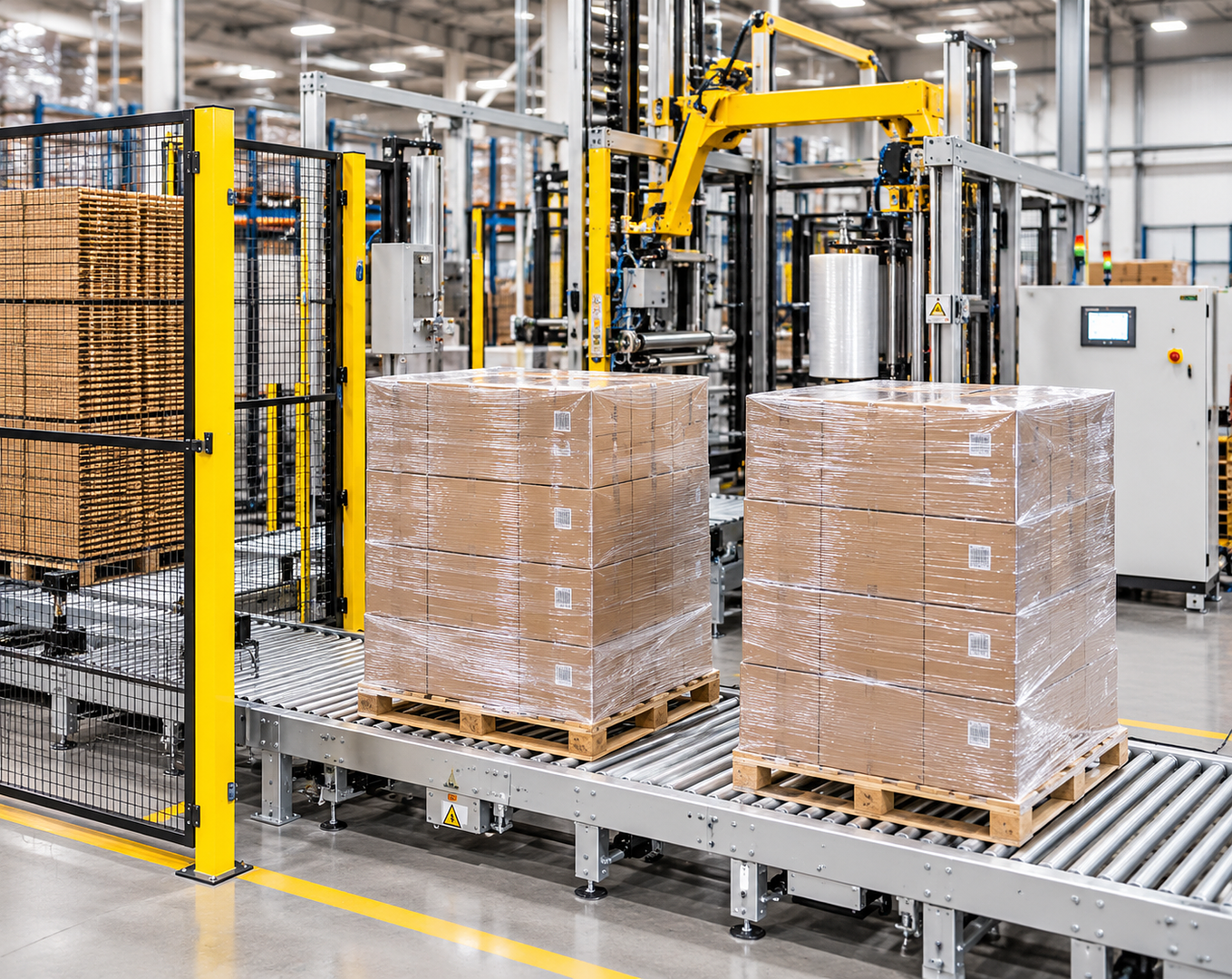
5. Pallet Wrapping Systems: Improving the Final Stage of Packaging
Once products have been packed into cartons and assembled onto pallets, they need to be secured for storage and transportation.
Pallet wrapping is another area where manual processes can create inefficiencies.
Manually wrapping pallets requires time, physical effort and consistent application to achieve a secure load. Results can vary depending on the operator, potentially affecting load stability during handling and transit.
Automatic and semi-automatic pallet wrapping systems provide a more controlled approach.
These systems help standardise the wrapping process, applying stretch film consistently around palletised loads while reducing the amount of manual effort required.
Depending on the application, pallet wrapping machinery can offer several advantages:
- More consistent pallet wrapping.
- Reduced manual handling and physical effort.
- Improved load security during transportation.
- Better control over film application.
- Increased packaging productivity.
- A more efficient end-of-line packaging operation.
For businesses dispatching significant numbers of pallets every day, automating this final stage can make a noticeable difference to workflow efficiency.
6. Choosing the Right Packaging Machinery for Your Operation
Investing in packaging automation is an important decision, and the most effective solution will depend on your individual operational requirements.
Before introducing new machinery, it's worth reviewing your current packaging process and identifying where improvements would deliver the greatest benefit.
Consider the following questions:
How many cartons are you processing each day?
Understanding your daily packaging volume will help determine whether manual, semi-automatic or automatic equipment is most appropriate.
Where are your current bottlenecks?
Identify whether carton sealing, pallet wrapping or another stage of the packaging process is slowing down your operation.
How much time is spent on repetitive manual tasks?
Look for opportunities to reduce time-consuming activities and allow employees to focus on tasks that require greater attention.
Are your packaging results consistent?
Consider whether your current processes deliver reliable carton sealing and secure pallet loads across every shift.
Can your existing equipment support future growth?
Your packaging operation should be capable of adapting to changing production requirements and increasing order volumes.
By assessing these factors, businesses can make more informed decisions about machinery investments and prioritise improvements that offer practical operational benefits.
7. Improving Warehouse Packaging Efficiency with CHETO Engineering Ltd.
At CHETO, we understand the importance of reliable and efficient packaging operations.
Packaging machinery plays an important role in helping businesses streamline their processes, reduce repetitive manual activities and maintain consistent packaging standards.
Whether you're looking to improve carton sealing, optimise pallet wrapping or review your wider packaging operation, investing in suitable machinery can help create a more efficient warehouse environment.
Our packaging machinery solutions, including automatic case sealers and pallet wrapping systems, can support businesses looking to improve their end-of-line packaging processes.
By identifying areas where automation can make a difference, businesses can take practical steps towards improving productivity, supporting their workforce and preparing their operations for future demands.
Is It Time to Improve Your Warehouse Packaging Process?
Warehouse packaging efficiency has a direct impact on productivity, labour requirements and the ability to meet customer demands.
From reducing repetitive manual tasks to introducing automatic case sealers and pallet wrapping systems, there are several ways businesses can improve their packaging operations.
The key is understanding where inefficiencies exist and choosing equipment that addresses the specific challenges within your warehouse.
Looking to improve your packaging process?